ABOUT THE GAME
Solarix is a science-fiction stealth-horror game featuring open-ended levels for both combative and stealth-focused playstyles. Solarix combines old-school sci-fi horror with next-gen style and graphics. The story follows an electrical engineer desperately fighting for his life after an infection wipes out an interstellar research station. He must contain the disease, battling both the remnants of the crew and his own fracturing mind. Our goal is to go beyond jumpscares and cheap thrills. Solarix is about a world that overpowers you with unease, insecurity, and desperation, forcing you to confront your own role in the horrors to come.
ROLES & RESPONSIBILITIES
- Creating game design documentation to be presented to the team.
- Re-design the existing engine to be a shippable product.
- Working closely with the Writer to ensure continuity between gameplay and narrative.
- Storyboarding out the progression of the game.
- Assisting with writing duties & directing some in-game audio logs.
- Balancing the health and ammunition systems to stay in line with the survival horror theme of the game.
- Adjusting the AI parameters for vision and hearing capabilities is dependent on difficulty level.
When I joined the Solarix team, the project consisted of a collection of systems and mechanics without a cohesive structure or clear gameplay experience. My primary objective was to evaluate the existing mechanics, familiarize myself with the engine (UDK), and establish a clear direction for the game. One non-negotiable element was the inclusion of stealth as the central gameplay mechanic, which became the foundation for my design decisions moving forward.
CORE GAMEPLAY DIRECTION
Establishing a Unified Vision: I created a detailed pitch deck proposing Solarix as a science-fiction survival horror game, which I presented to the Studio Head. After approval, I translated this vision into a presentation for the entire team, aligning everyone on the gameplay philosophy and direction.
Stealth-Focused Gameplay: To enhance the stealth experience, I recommended removing high-powered weapons like the assault rifle and rocket launcher, which conflicted with the stealth-oriented gameplay. Instead, I introduced a smaller, thematic arsenal:
- Electro-Shock Baton: A versatile melee tool aligned with the protagonist’s role as an engineer.
- Silenced Pistol: For quiet ranged takedowns.
- Shotgun: A high-risk fallback weapon for critical moments.
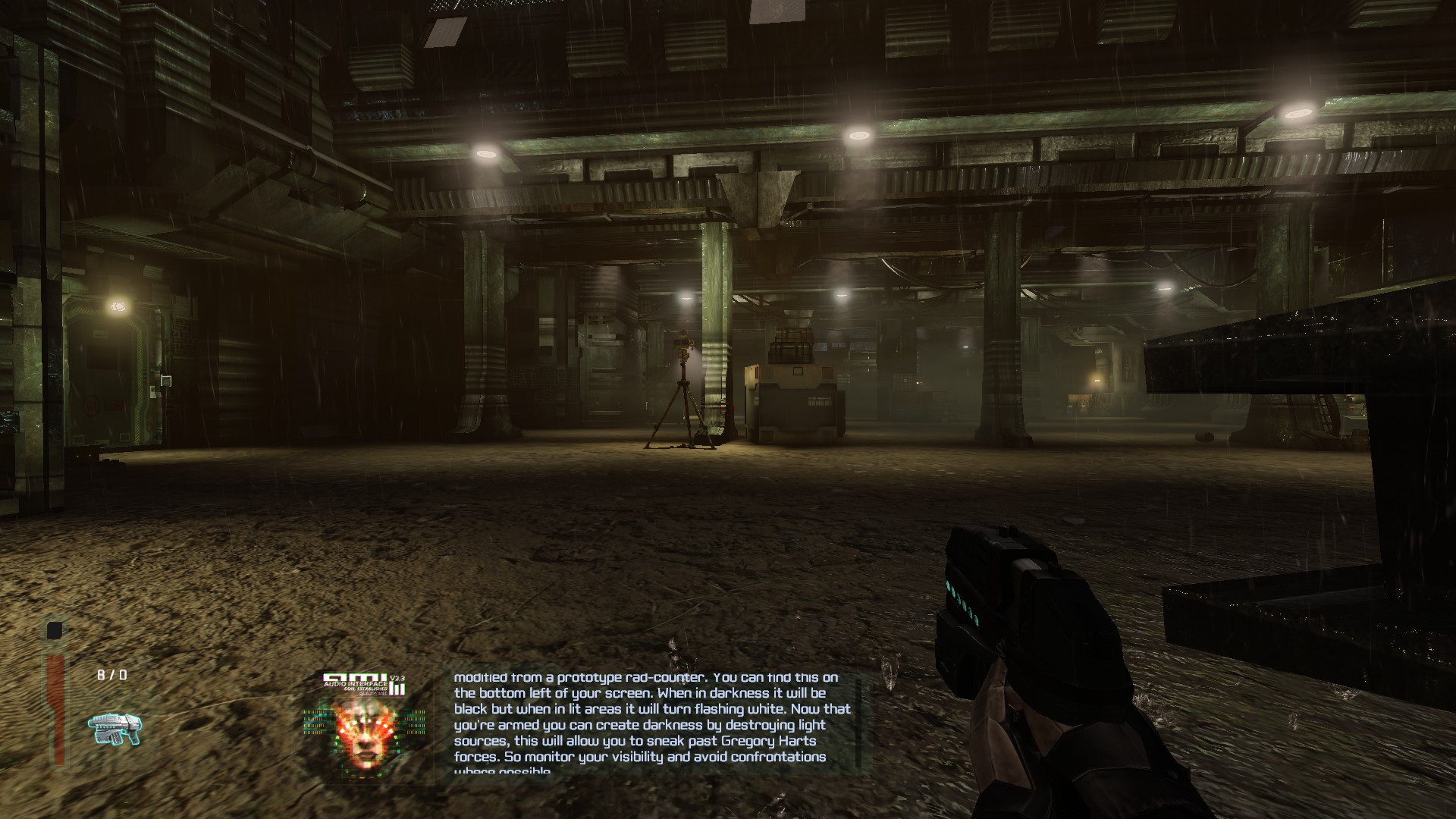
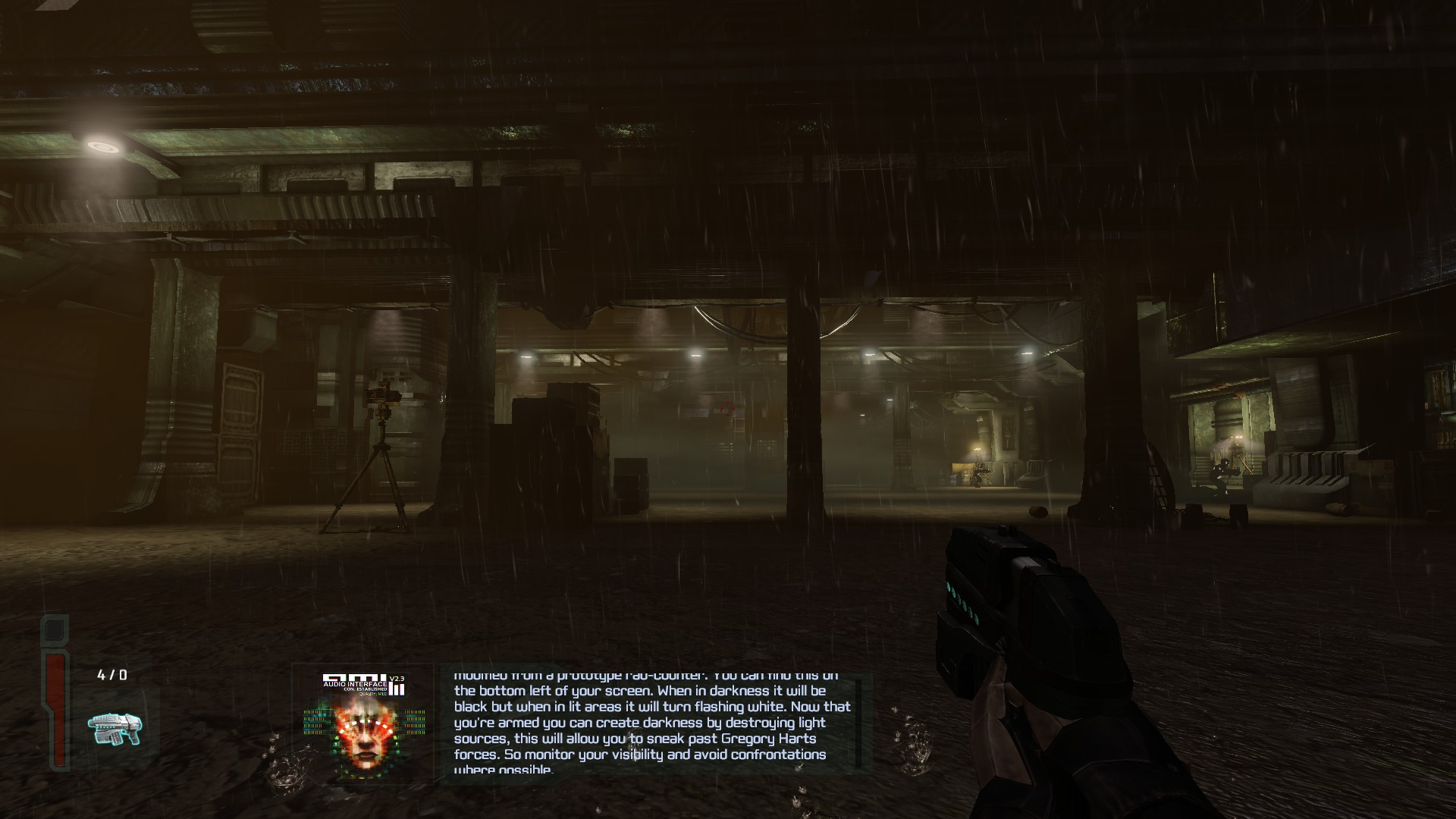
Environmental Interaction: One of the key features I introduced was destructible light sources (images below), allowing players to create their own paths and concealment opportunities dynamically. This added a layer of player agency while reinforcing the stealth mechanics.
LEVEL DESIGN CONSIDERATIONS
Testing and Iteration in the “Zoo”: I created a dedicated test map (“the zoo”) containing all interactable game elements, including weapons, AI, and props. This space enabled me to prototype and refine mechanics efficiently before implementing changes in the live, source-controlled environment.
Environmental Storytelling: As production ramped up, I integrated props and small assets that enriched the world’s believability and delivered subtle storytelling through the environment.
Adaptation to Technical Limitations: The lack of an in-house animator constrained the scope of scripted sequences. To address this, I focused on timing and pacing within the live editor to maximize the impact of existing assets and animations. Weekly meetings with the Studio Head ensured constant iteration and alignment on these elements.
HUD & PLAYER FEEDBACK
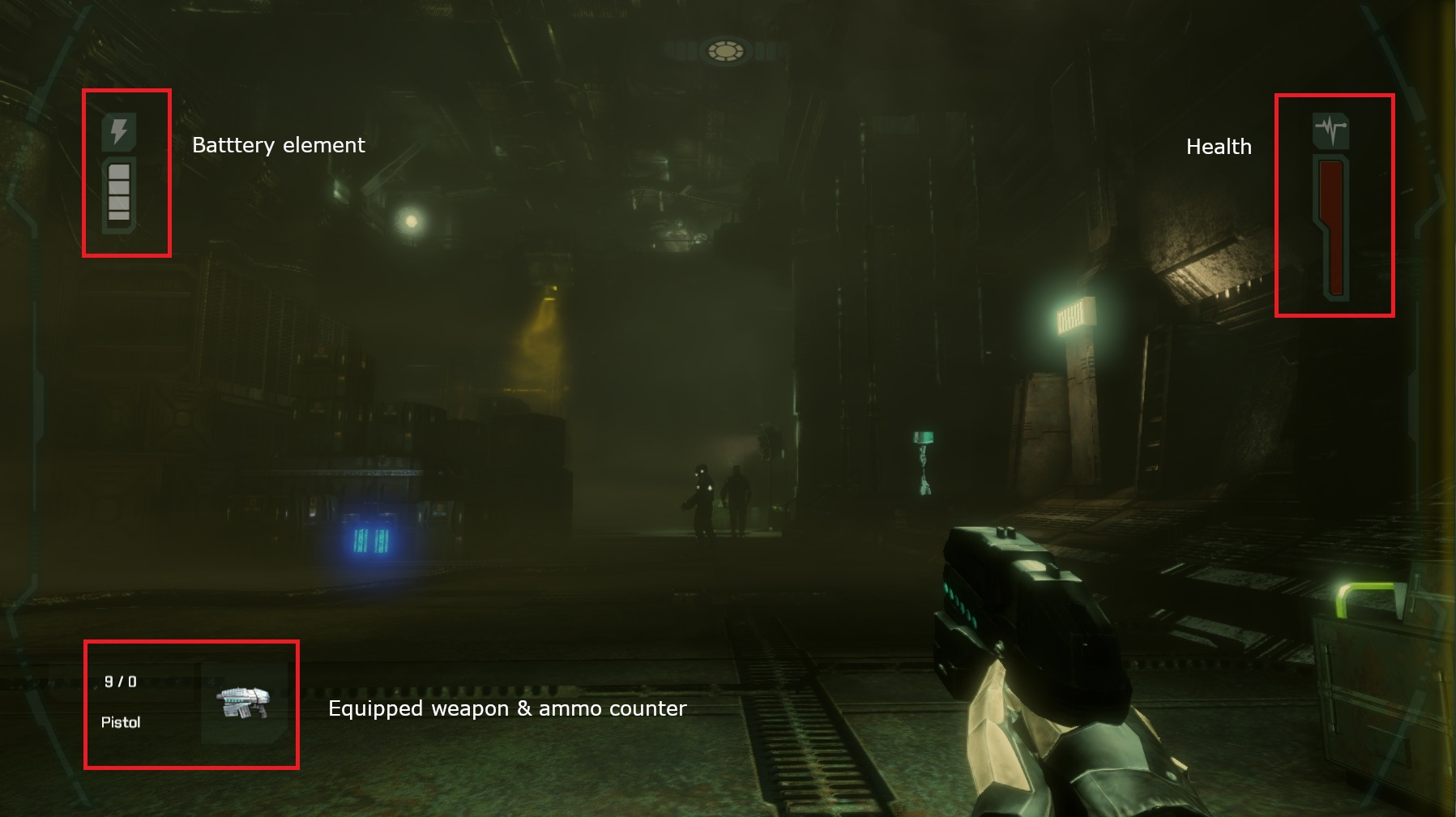
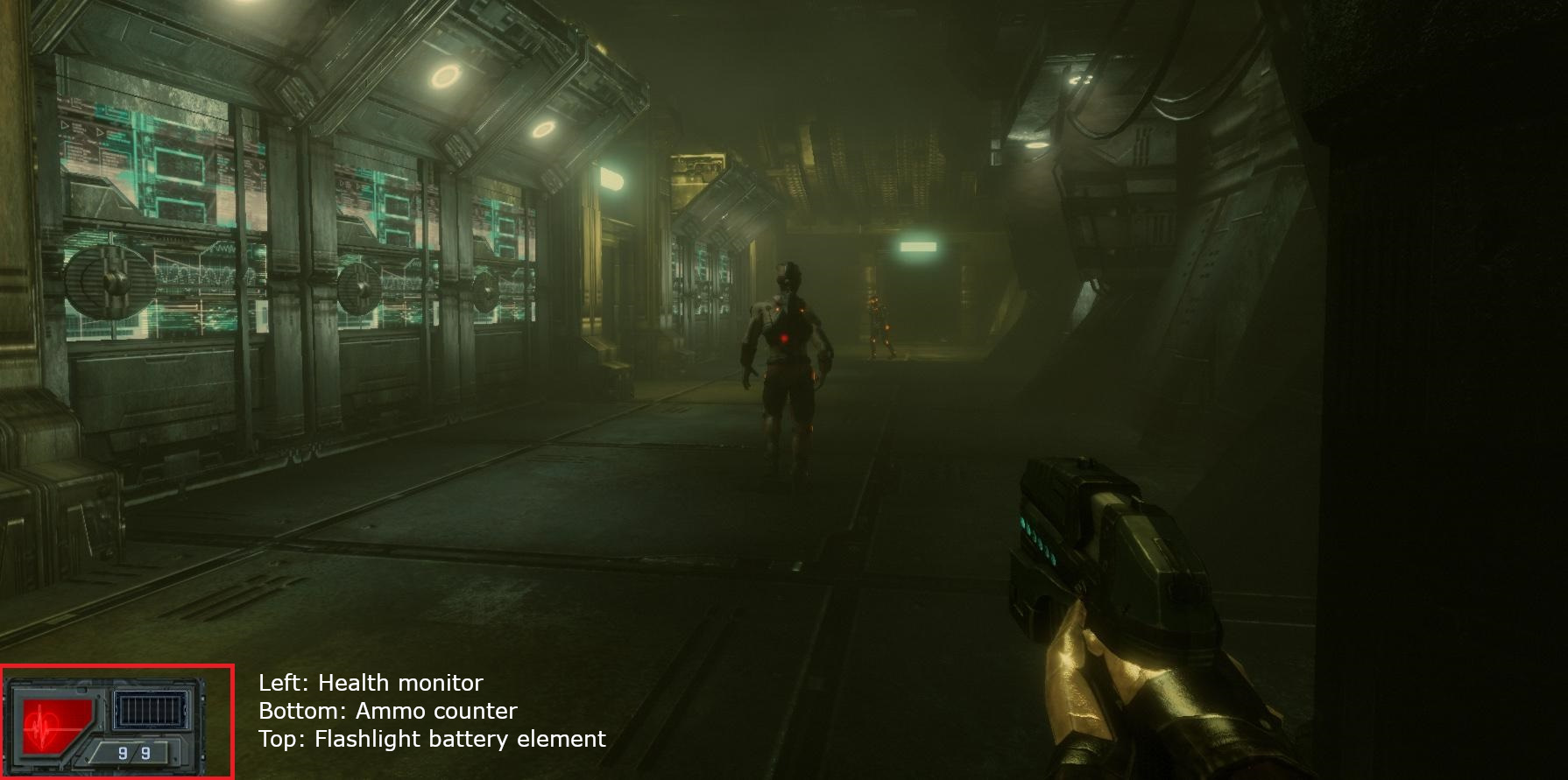
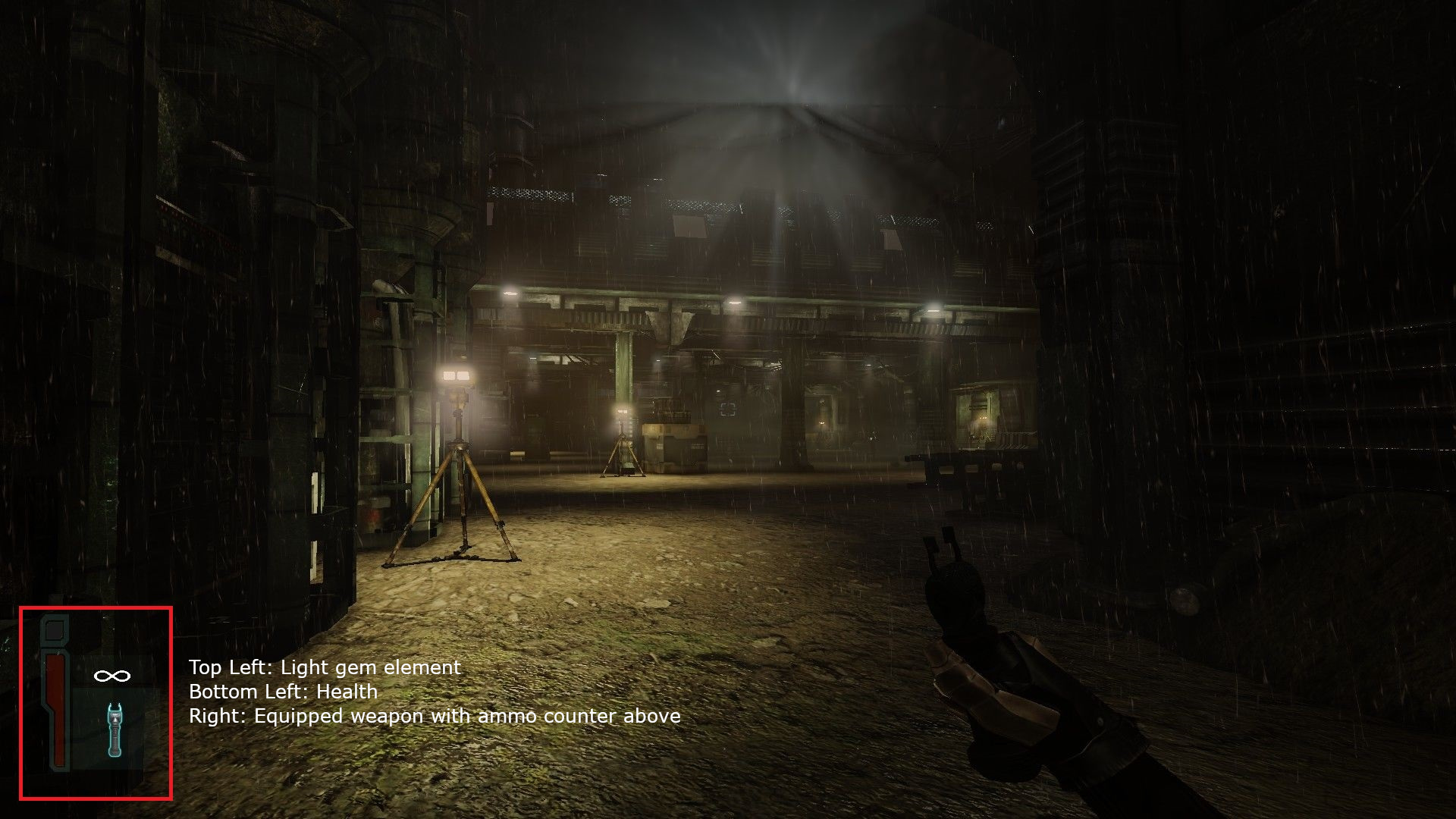
The HUD underwent many iterations below you can see its visual evolution.
Evolving the HUD: Upon joining, I identified disorienting HUD placements that disrupted immersion. I iteratively redesigned the HUD, consolidating elements into a cohesive layout in the bottom-left corner.
Light-Gem Mechanic: To enhance stealth feedback, I implemented a “light-gem” element that glowed white when the player was visible to enemies, inspired by Thief. This design leveraged existing AI mechanics, which already tracked player visibility states, making implementation efficient.
Missed Opportunities: A time constraint forced the removal of the flashlight and Electro-Shock baton battery mechanic. While this decision simplified gameplay, it weakened the survival aspect of the experience—a compromise I fought against but had to accept due to production deadlines.
NARRATIVE DESIGN INTEGRATION
Silent Protagonist Philosophy: A key narrative design decision was the choice to keep Walter, the protagonist, silent throughout the game. This was a conscious decision to empower players with the freedom to project their own emotions and thoughts onto him. By not having Walter speak, we allowed players to define their own internal dialogue, creating a more personal and immersive experience.
This was a somewhat unconventional approach for a survival horror game, as most titles rely on the protagonist’s voice to convey emotions and reactions. However, keeping Walter silent reinforces the isolation and mystery of the setting. His tasks, motivations, and interactions with the world were conveyed through the actions of other characters, such as team members and mission contacts, who provided direction without directly engaging Walter in conversation. This also meant that the player was never “spoon-fed” the story through dialogue but instead had to deduce much of the narrative from the environment, their actions, and the messages left behind.
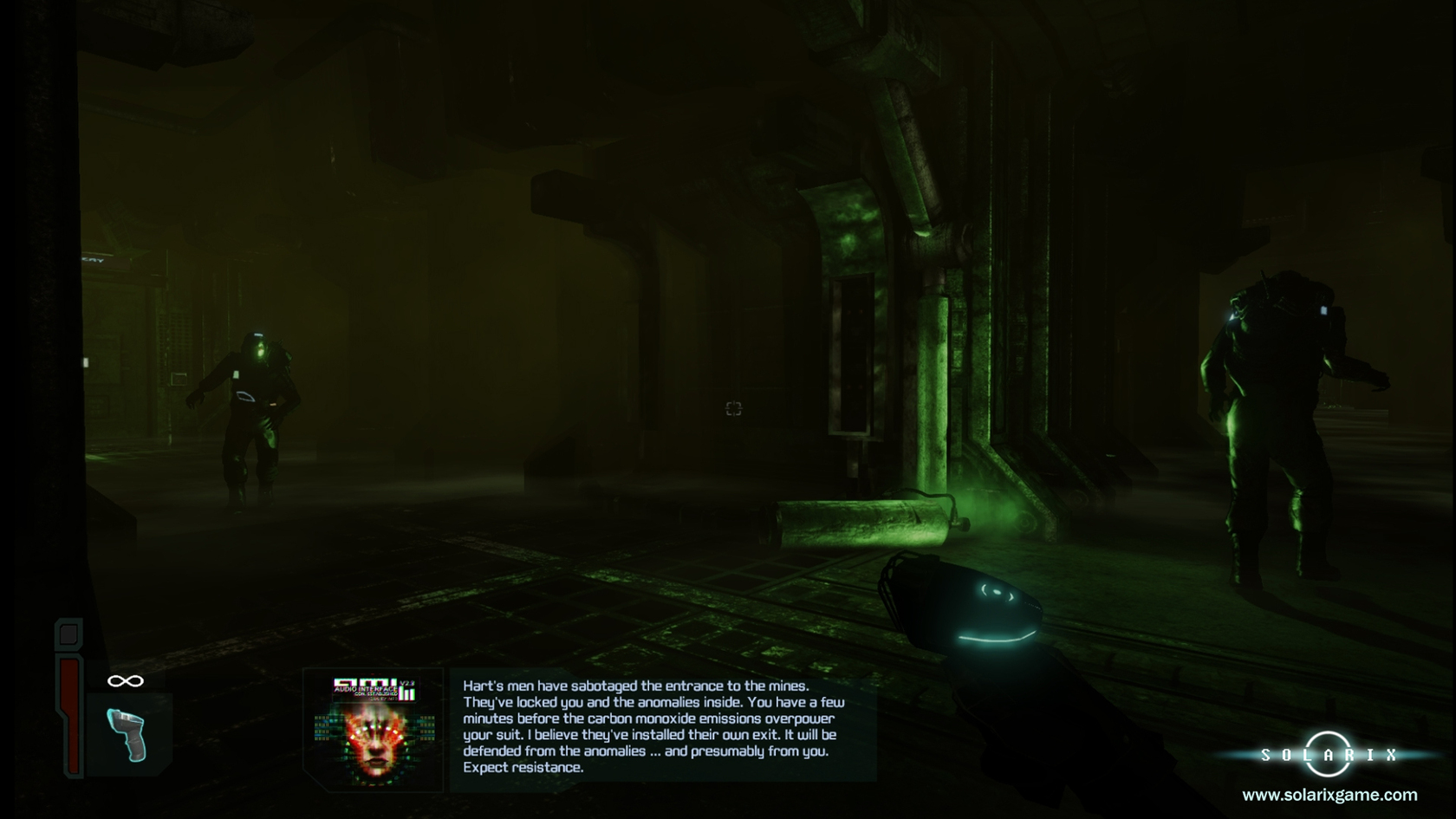
Environmental Storytelling: Environmental storytelling was a cornerstone of the narrative design, with the physical world acting as a primary vehicle for narrative delivery. Each location in the game was designed to reveal the backstory and context of the world, the characters, and the larger narrative through subtle clues embedded in the environment.
As the player navigates through the derelict environments, they encounter abandoned personal effects, damaged equipment, and notes or emails scattered throughout the world. These items and details provide a backstory on Walter’s journey and the tragic events leading to his current situation. I worked closely with the art team to ensure these props and environmental elements told a cohesive story that was consistent with the game’s overall tone and themes. For example, a series of hastily abandoned workstations might tell a story of employees who were forced to flee, while a handwritten note could reveal a character’s last moments or thoughts.
Audio Logs & Written Documents: To supplement the environmental storytelling, I implemented audio logs and written documents such as emails, chat logs, and personal notes. These pieces of narrative content provided players with deeper insight into the world of Solarix and the relationships between characters.
PRODUCTION & COLLOBORATION
Cross-Department Collaboration: I frequently liaised with the programming and art teams to refine mechanics, troubleshoot interactions, and implement world-building assets.
QA and Feedback: I addressed QA feedback continuously, ensuring that props, lighting, and scripted sequences met the design goals. Adjustments were made late into production to resolve pacing and player feedback issues. Post-launch we pushed multiple patches and QOL of life balance changes.
OUTCOME
This approach transformed Solarix from a disjointed collection of mechanics into a cohesive survival horror experience. By focusing on stealth gameplay, thematic weaponry, environmental interaction, and narrative-driven design, I contributed to creating a game that emphasized tension, player choice, and atmospheric storytelling.
 Mark Gregory