ABOUT THE GAME
Necropolis Suite is an immersive narrative-driven cosmic horror game about discovery, knowledge, and the meaning of transcendence. Can you escape the terror that lurks in the suite?
Live. Learn. Die. Transcend.
A game about knowledge, discovery and the meaning of transcendence. Can your sanity handle what you learn as your perception of the world changes around you? An experience of knowledge and sanity intertwined as one.
Whitechapel, London, 1886. Deep in the city’s infamous east end stands a house, perched on the borders of this twisted dreamscape we call reality. Within these chambers, sheltered by shadow from the prying eyes of the city, Frederick Ulaevan probes the fringes of understanding in an attempt to uncover the occult truths of the universe.
Here, at the edge of sanity, madness and knowledge are indistinguishable.
You are JP Chambers, a Detective for the newly created Metropolitan Police Force based out of Whitechapel. When the mad Ulaevan turns himself in, raving about dark visions and unspeakable secrets, you must go to his estate and discover what has actually taken place within the impossible twists and loops of the architecture.
Sift through information, follow the clues, and piece together the truth in a true detective fantasy.
ROLES & RESPONSIBILITIES
- Concepting the game in paper form.
- Creating design documentation.
- Managing a team of 11 developers ranging from AAA to Graduates.
- Working closely with the Writing Team to ensure continuity between gameplay and narrative.
- Storyboarding out the progression of the game.
- Level design documentation.
- Implementing the level design.
- Asset reviews, feedback and vision keeping of the project.
GAME CONCEPT & GAMEPLAY FLOW
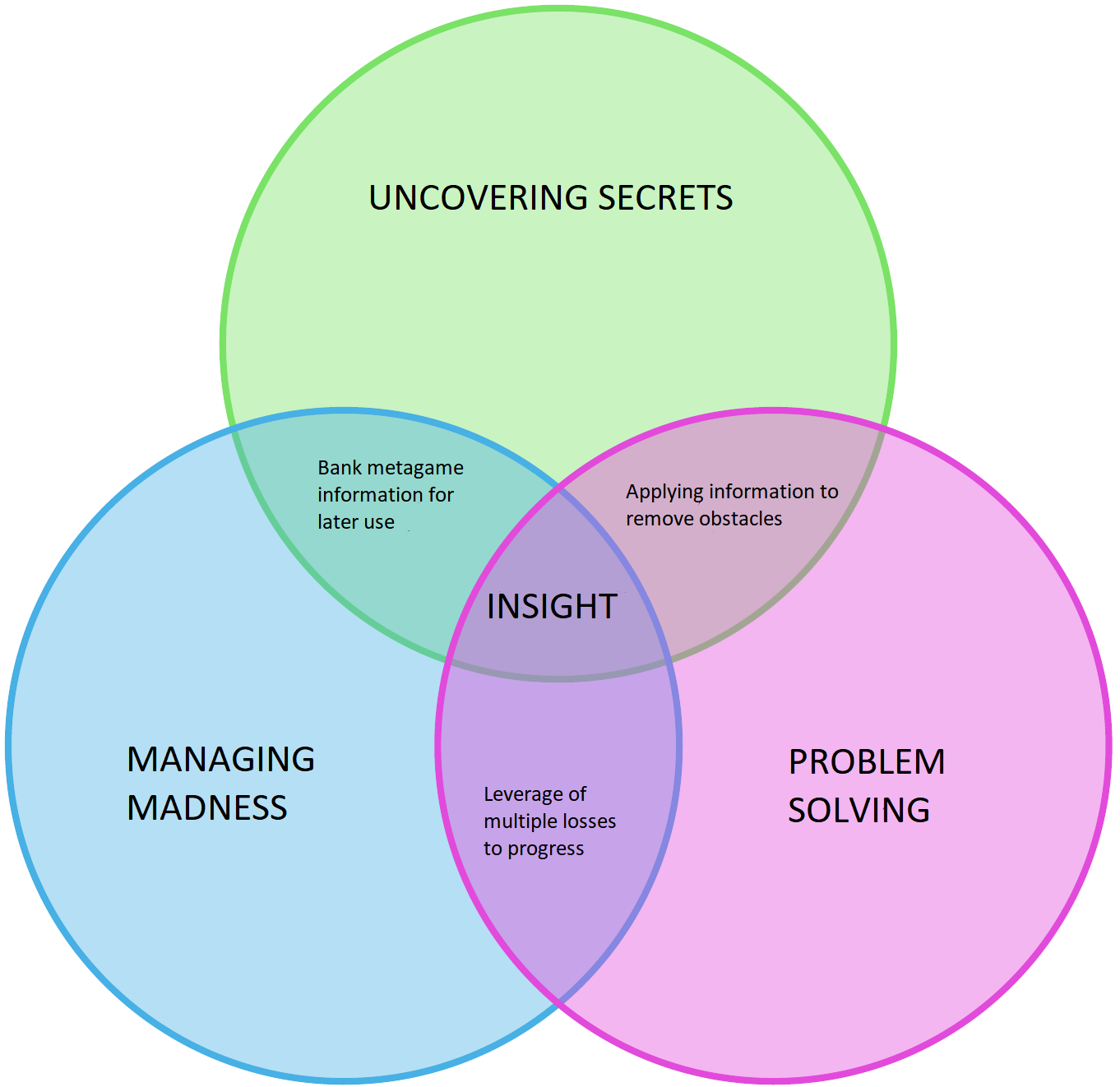
The Necropolis Suite project emerged from my fascination with the “insight” or “sanity” systems in games like Bloodborne. After completing the game, I became eager to expand on the concept of a system where player sanity directly impacted the environment. Inspired by cosmic horror themes, I began conceptualizing how the player’s mental state could alter both the world and gameplay itself, creating a unique experience.
The core design consideration was to develop a system where the player’s actions directly influenced the world around them – both visually and interactively – by manipulating the level of “insight” they had. Unlike linear systems, this insight mechanic offered the player full agency over their mental state, allowing them to increase or decrease their insight, which in turn transformed the environment. This meant that the player could choose how much to engage with the world and explore, knowing each decision would have significant consequences.
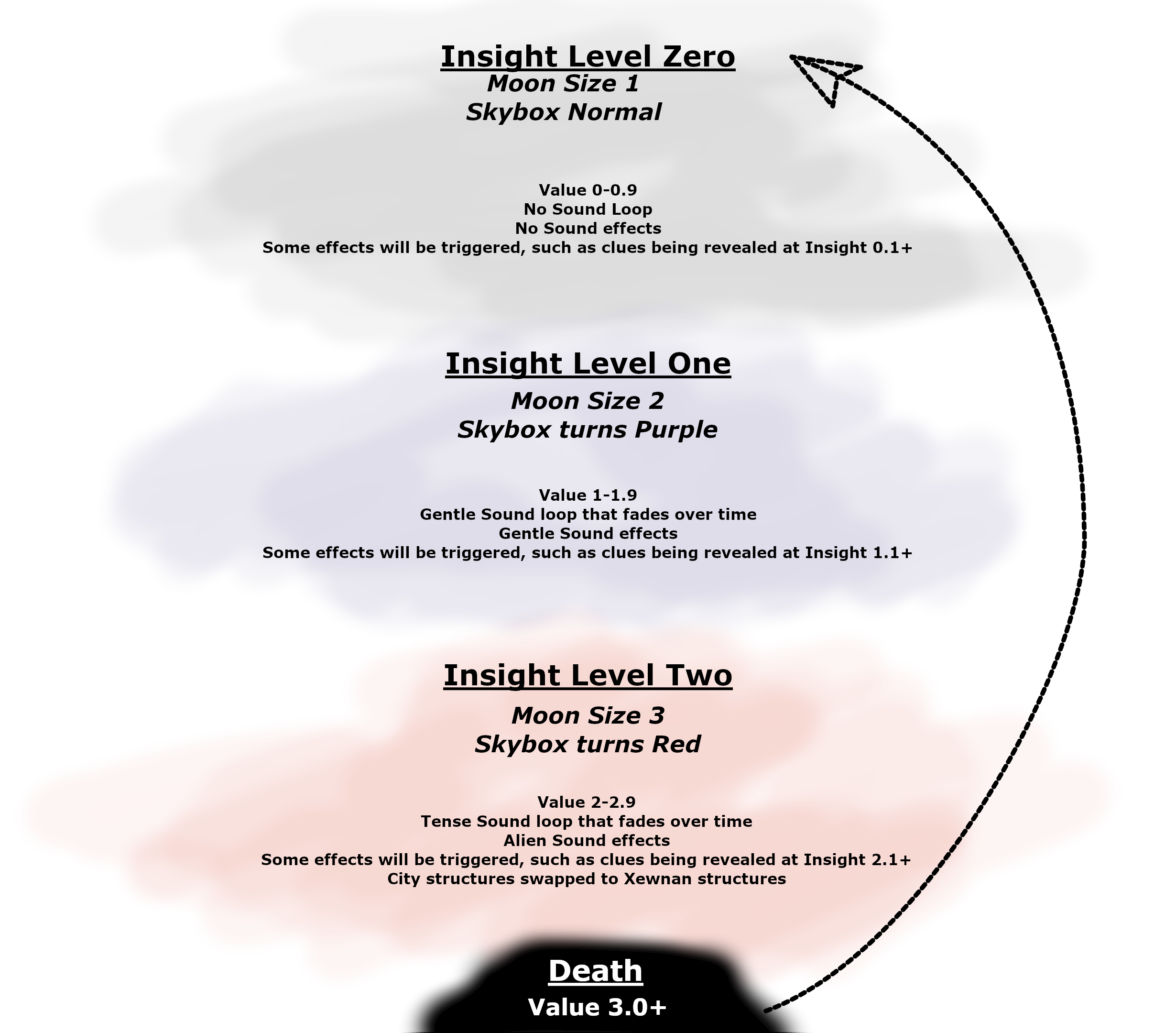
To manage this, I created a tiered system of insight progression, starting at I0 (base level) and going up to I3 (high insight). Each level of insight was linked to key gameplay elements, such as unlocking progression-sensitive items or revealing hidden areas. For instance, a locked door would require the player to venture into the high-insight world to retrieve a key, forcing them to flirt with insanity to continue the game. This made player choice central to both narrative and gameplay progression.

DEATH & PROGRESSION SYSTEM
One of the most integral gameplay design choices was the death and progression system. In Necropolis Suite, death is not the end but an opportunity to gain knowledge. Upon death, the protagonist, JP, respawns with the knowledge of previous runs, including journal entries, documents, and shortcuts they had unlocked. This structure encourages players to approach each run as a learning opportunity, planning and strategizing to maximize their chances of uncovering more of the story and the mysteries of the world. This system was inspired by Outer Wilds, where the player continuously gains more knowledge despite their repeated failures, reinforcing the theme of cosmic horror where the unknown constantly looms over the player.
LEVEL DESIGN CONSIDERATIONS
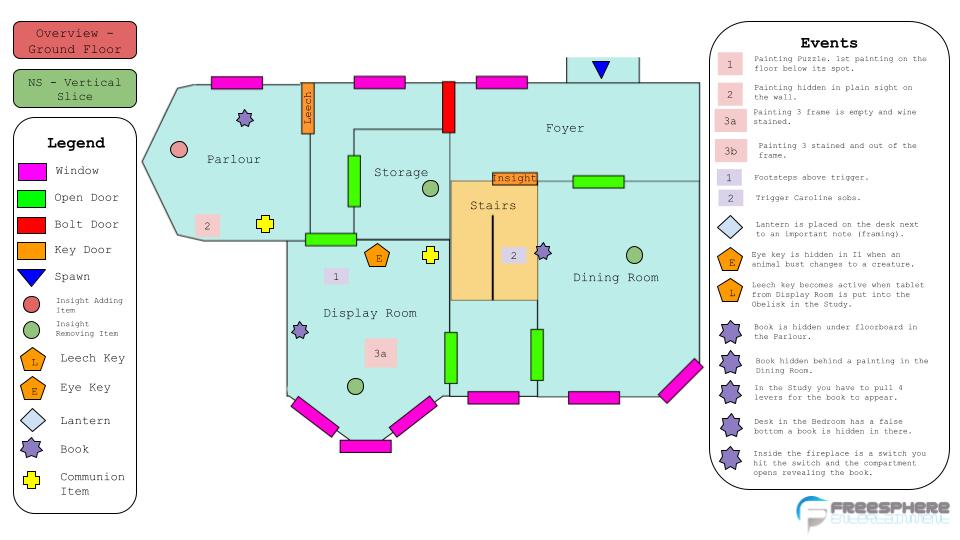
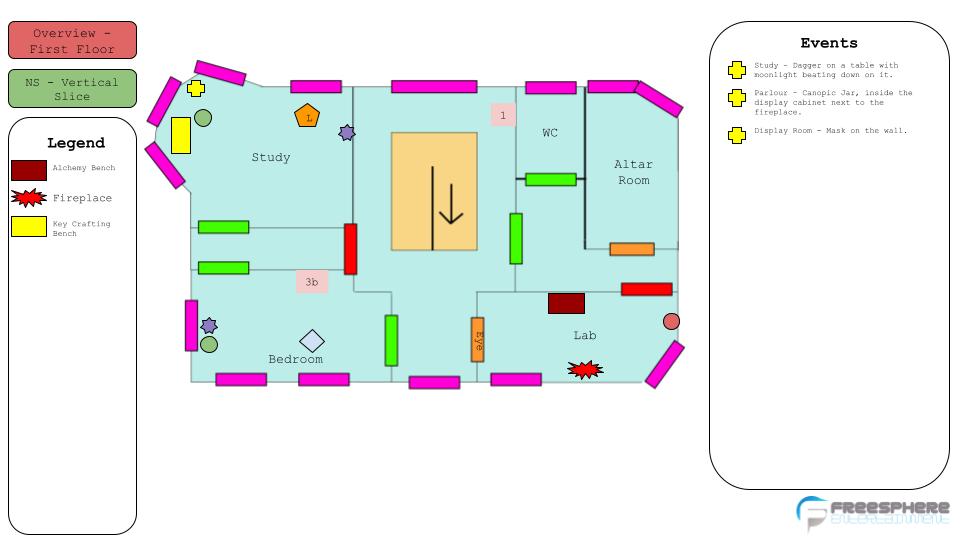
One of the most significant design decisions in Necropolis Suite was the choice to set the game within a single, confined location – a townhouse. This decision was driven by several key factors, primarily focusing on creating an intimate, high-tension environment that would support the game’s horror narrative. Given the limited scope of the team and the need for a highly detailed, atmospheric experience, I felt that working within a confined space would allow us to create a more concentrated and immersive horror experience. Additionally, focusing on a single location enabled us to refine the environment, making it feel alive and reactive to the player’s actions.
LOCK & KEY PHILOSOPHY
- Inspired by Resident Evil, I implemented a “lock-and-key” system to encourage exploration and progression
- Certain areas require a higher insight level to access, influenced by the player’s mental state and actions
- This dynamic approach created a reactive world, with areas shifting between regular and high-insight states, offering new paths and hidden items
SHORTCUTS
- To alleviate frustration from the death mechanic, I integrated shortcuts for faster navigation back to previously explored areas
- Player feedback revealed confusion with lock-and-key doors, so I redesigned these to require crafting rather than just finding keys, adding complexity and a greater sense of accomplishment
VERTICALITY
- Designed the environment to encourage creative interaction using movement mechanics like running, crouching, jumping, and leaning
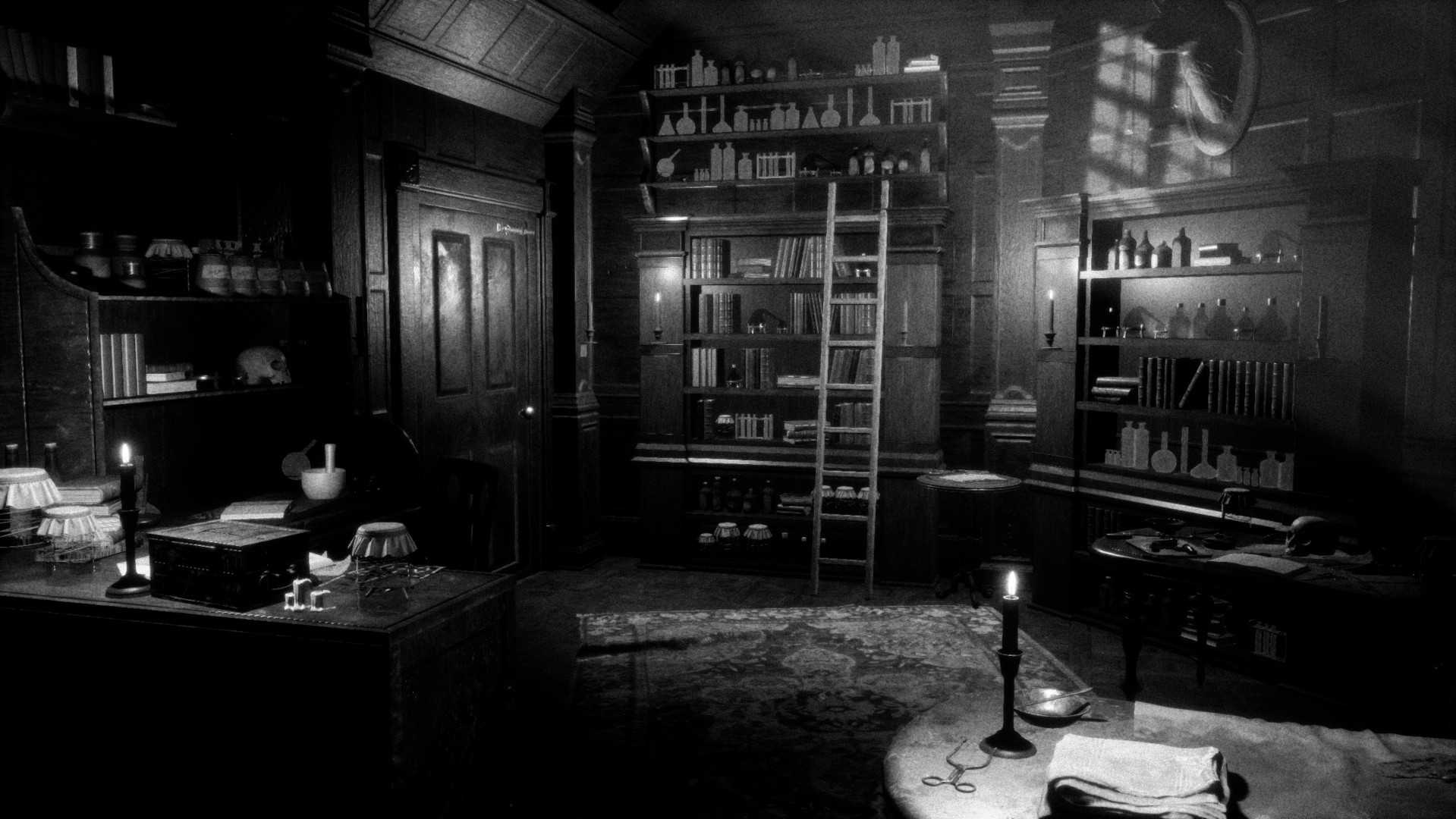
- Implemented vertical elements like tall bookcases and movable furniture to solve puzzles and engage with the environment
- These mechanics also tied into the insight system, where interacting with objects contributed to the player’s mental state and exploration
Dynamic World State:
- The world shifted between two states based on the player’s insight level – normal and high insight
- Each shift affected architecture, atmosphere, and puzzle progression, maintaining a sense of unease
- Level layouts were meticulously planned to allow these changes, creating layers of progression and revealing new areas and challenges
ATMOSPHERE
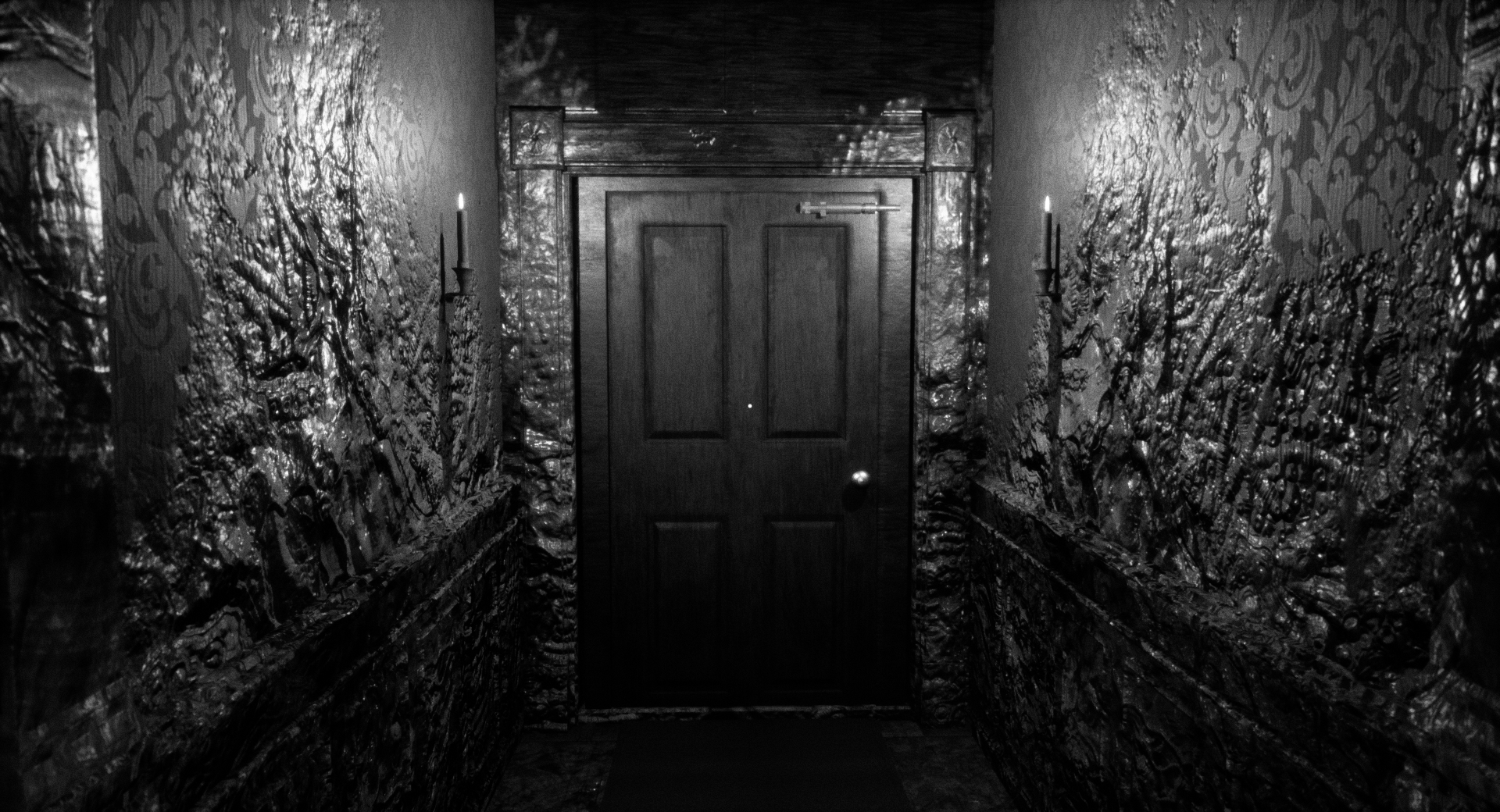
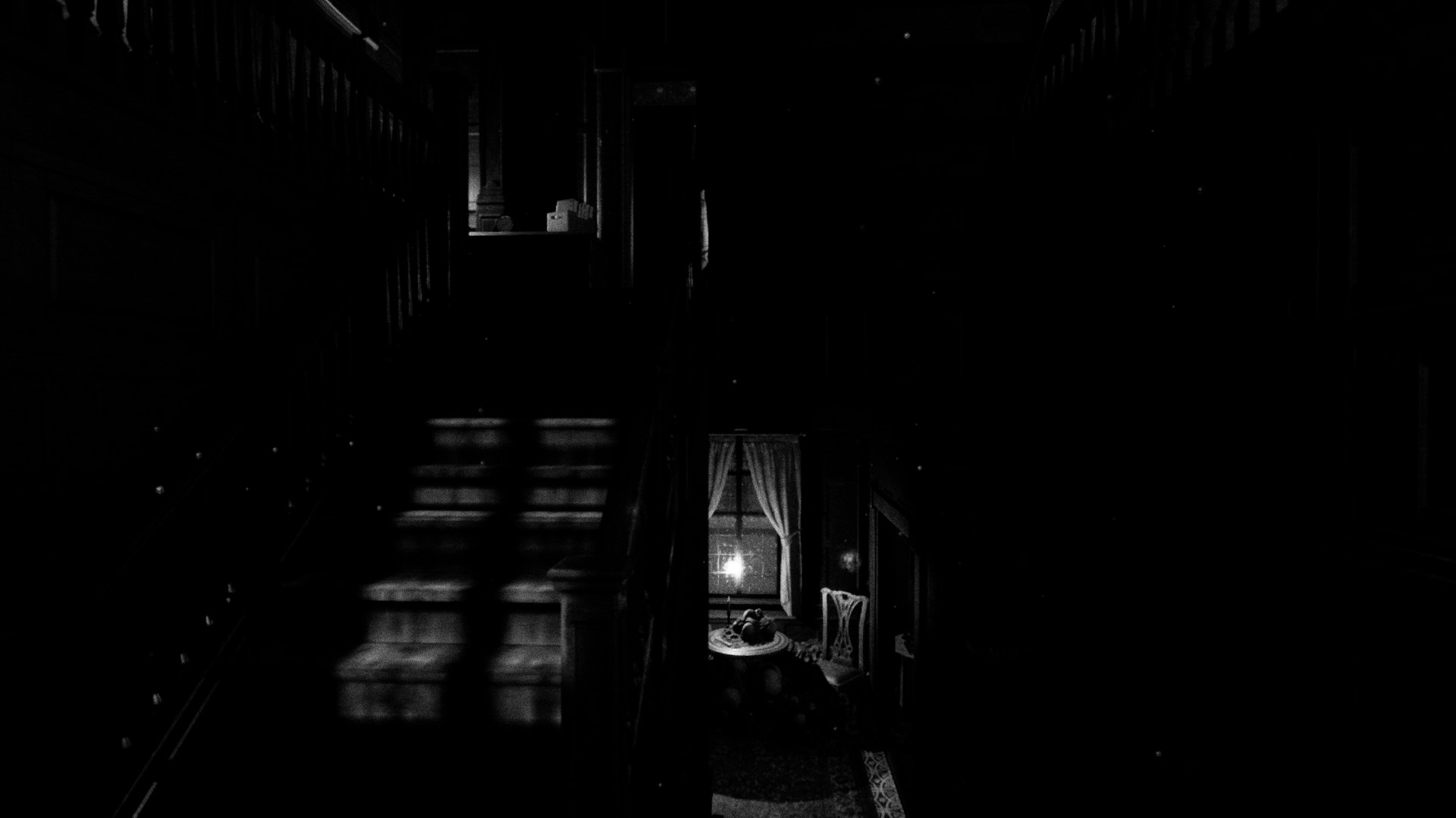
- Collaborated with the art team to create a claustrophobic and unsettling townhouse environment
- Focused on narrow hallways, high ceilings, and dim lighting to enhance tension and isolation
- The insight system was integrated visually and aurally, with the world warping and becoming surreal as the player increased their insight level

MOVEMENT & INTERACTIONS
- Movement Mechanics: Leveraged character movement mechanics such as walking, running, crouching, jumping, and leaning to enhance engagement
- Creative Use: Designed gameplay to encourage players to utilize movement mechanics creatively
- Example: Tall bookcases required players to jump or drag chairs to reach objects on top
- Example: Crouching and leaning allowed players to search under furniture like beds and cabinets for hidden items
- Exploration Opportunities: Integrated movement mechanics into exploration and item discovery to make the environment interactive
- Enhanced Immersion: These mechanics increase the player’s sense of immersion and agency within the game world
OUTCOME
The design decisions behind the Necropolis Suite revolved around creating a unique blend of cosmic horror, player agency, and environmental manipulation. The insight system was at the core of this design, allowing players to control how much of the world they wanted to uncover, at the risk of their sanity. The focus on a single, well-designed location, combined with mechanics that encouraged exploration and the strategic use of player knowledge, created a deeply immersive experience that challenged players to learn, adapt, and survive. Each gameplay decision – whether in level design or systems designs – was made to support and enhance the horror atmosphere, making the world of Necropolis Suite a place where every choice had consequences.
 Mark Gregory